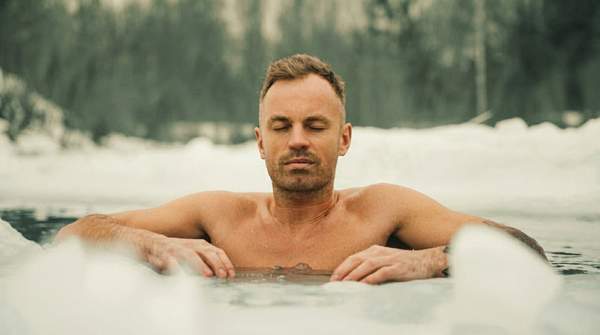
Cold plunges are proposed to improve mental well-being through three physiological routes: a surge of neurotransmitters like norepinephrine, dopamine, and endorphins; regulation of the autonomic nervous system, including the vagus nerve; and a hormetic stress response that may modulate cortisol over time. That's the honest, exciting part of the story. The equally honest part is that the science behind it is still young and methodologically shaky. A 2025 review in Molecular Psychiatry, authored by Liam Browning, Nicholas Fabiano, and colleagues, concludes that existing studies are constrained by small samples, missing control conditions, and confounding factors. Here's how the proposed mechanisms work, and where the evidence stops.
The Cold Plunge-Mental Well-being Connection: An Explanatory Model
The best way to understand the theory is as a causal chain: one physical stressor—cold—triggering several biological systems at once, with proposed downstream effects on mood and stress resilience. The table below organizes each proposed pathway, its physiological effect, its proposed mental benefit, and how strong the supporting evidence actually is.
| Proposed mechanism | Physiological effect | Proposed mental benefit | Evidence support and qualification |
|---|---|---|---|
| Neurotransmitter release | Cold water immersion is linked to increased norepinephrine, dopamine, and endorphin levels | Alertness, focus, and improved mood | Described by Stanford Lifestyle Medicine and Dartmouth Health as research-supported; not quantified in the evidence reviewed here |
| Autonomic nervous system regulation | Cold exposure is proposed to stimulate the vagus nerve and improve vagal tone, training the system to shift between activation and rest | Better stress resilience and recovery from emotional challenges | Proposed mechanism from wellness-practitioner sources; not established in controlled trials cited here |
| Hormetic stress response | Consistent full-body immersion is associated with lowered cortisol levels | Enhanced mood regulation and long-term stress resilience | Stanford Lifestyle Medicine reports research suggests this for consistent practice; long-term effects remain under-studied |
| Research limitations | Small sample sizes, lack of control conditions, reliance on self-report data, and confounding by physical activity, social engagement, and green-space exposure | — | Identified by the Molecular Psychiatry review and a 2025 PLOS ONE systematic review and meta-analysis by Cain, Brinsley, Bennett, Nelson, Maher, and Singh |
| Practical application | Beginners advised to start with 30–60 second cold showers; research protocols use water at or below 15°C (roughly 50–59°F) for at least 30 seconds, immersed at or above chest level | — | Parameters drawn from the PLOS ONE review's inclusion criteria and practitioner guidance; individual responses vary |
Read down the first three rows and you can trace the full proposed arc: cold hits the skin, chemistry shifts, the nervous system adapts, and—over repeated exposures—stress hormones may settle. Read the last two rows and you see the boundary of what anyone can honestly promise.
Pathway 1: Neurotransmitter Release – Boosting Mood and Focus
The first pathway is the most intuitive. When cold water hits your body, your brain chemistry changes—and fast. Writing for Stanford Lifestyle Medicine in May 2024, Sharon Brock summarized the research: cold water immersion may improve mental health by increasing endorphin and norepinephrine levels. Norepinephrine is the alertness chemical; it sharpens focus and makes the world feel vivid. Endorphins, meanwhile, are associated with mood enhancement.
Dartmouth Health's reporting adds dopamine to the picture, noting that studies have linked cold plunging to treating depression and improving mood, and that it can boost levels of dopamine and endorphins, "creating alertness and happiness." Lucy Pilcher, a clinician at Dartmouth Hitchcock Medical Center who cold plunges herself, described the experience to Dartmouth Health as "this energized, very connected feeling of being alive." That's a practitioner's personal account, not a trial result—but it maps neatly onto the neurochemistry described above. What the evidence reviewed here does not provide is a specific, quantified dopamine or norepinephrine increase from controlled human trials, so treat any precise percentage figures you encounter elsewhere with skepticism.
Pathway 2: Autonomic Nervous System Regulation – Enhancing Stress Resilience
The second pathway is about training, not chemistry. Your autonomic nervous system has two modes: sympathetic (fight or flight) and parasympathetic (rest and recover). The vagus nerve is the main cable connecting your brain to your heart, lungs, and digestive system, and vagal tone is a measure of how well that system functions. Practitioner guidance from Pangea Chiropractic proposes that cold plunges train your system to shift efficiently between activation and rest, and that regular cold exposure improves vagal tone and stress resilience.
The logic is appealing: cold water forces a controlled stress response, and by repeatedly practicing the shift from shock to calm, you get better at making that shift in ordinary life. Stanford's overview echoes the goal, suggesting cold water immersion can be adapted for either immediate relief or long-term resilience. But note the evidentiary weight here: the vagal-tone mechanism comes largely from wellness-practitioner framing rather than the controlled trials cited in the scientific reviews. It's a plausible, coherent proposal—not a settled fact.
Pathway 3: The Hormetic Stress Response – Adapting to Challenges
The third pathway is the slowest-burning and, for mental resilience, arguably the most interesting. "Hormesis" describes the idea that a small, controlled dose of a stressor prompts the body to adapt and become stronger. Stanford's Sharon Brock reports that for those aiming at long-lasting benefits—lowered cortisol levels, enhanced mood regulation, and increased resilience to stress—research suggests consistent full-body immersion may be beneficial.
Cortisol is the body's primary stress hormone, and the proposal is that repeated, deliberate cold exposure teaches the stress-response system to regulate itself more effectively over time, rather than simply spiking and crashing. The practice itself involves plunging into water of roughly 10–15°C (50–60°F), a range Brock notes has ignited significant research interest. The honest caveat: long-term effects are precisely where the evidence is thinnest. The 2025 PLOS ONE meta-analysis explicitly flags that future high-quality randomized controlled trials are needed to examine long-term effects and optimal protocols. The hormetic story is a hypothesis with supportive signals, not a conclusion.
Navigating the Hype: Current Scientific Limitations and Gaps
Here is where the enthusiasm meets the audit. The Molecular Psychiatry review by Browning, Fabiano, and colleagues is blunt: studies on cold exposure for mental health are constrained by small sample sizes, lack of control conditions, reliance on self-report data, and inadequate control of confounding effects from physical activity, social engagement, and "green space" exposure.
That last point deserves a moment of thought. Many people who cold plunge also swim in lakes with friends, take morning walks, or commit to a new wellness routine. Any of those could produce the mood improvements attributed to the cold itself. The PLOS ONE systematic review, led by Cain and Brinsley, adds that the current evidence base includes few randomized controlled trials, small samples, and a lack of diversity in study populations. Neither review says cold plunges don't work; both say the evidence isn't yet strong enough to say they do, definitively. That distinction is the whole ballgame for a reader trying to separate hype from science.
Taking the Plunge Safely: Practical Considerations
If, knowing the limitations, you still want to try, the evidence-informed approach is gradual. Practitioner guidance recommends starting with cold showers of 30 to 60 seconds at the end of your normal shower, extending the duration as your body adapts before progressing to dedicated plunges in water between 50 and 59 degrees Fahrenheit. Those temperatures align with research protocols: the PLOS ONE review included only trials using water at or below 15°C, with exposures of at least 30 seconds and immersion at or above chest level.
Timing matters too. Morning sessions are suggested to boost alertness for the day, while evening plunges should finish at least several hours before bedtime to avoid disrupting sleep. And the standing qualification: these parameters come from research inclusion criteria and general health advice, individual responses vary, and anyone with health concerns should consult a clinician first. Cold immersion is a significant cardiovascular stressor, and nothing here is medical advice.
Making an Informed Decision: Separating Hype from Science
So where does this leave you? Readers can make an informed decision about whether to try cold water immersion, understanding its proposed mechanisms and current scientific limitations. The three proposed pathways—neurotransmitter release, autonomic nervous system regulation, and the hormetic stress response—form a coherent, biologically plausible model of how a cold plunge might influence mood and resilience. But plausibility is not proof, and the responsible scientific reviews agree the field needs more rigorous trials before any definitive claims.
A simple self-check before you commit: you should be able to articulate the three proposed physiological pathways and at least two scientific limitations of cold plunge research—say, small sample sizes and confounding from physical activity or social engagement. If you can do that, you're equipped to evaluate any headline, influencer claim, or product pitch you encounter. If you decide to try it, start with 30-to-60-second cold showers, watch how your body responds, and treat any mood benefits you notice as your own anecdote—one data point, not a conclusion.
Sources
- Is cold exposure a viable lifestyle intervention for mental health? Reviewing evidence… — Nature
- Should You Cold Plunge? — Dartmouth Health
- Effects of cold-water immersion on health and wellbeing: A systematic review and meta-analysis — Journals
- Jumping into the Ice Bath Trend! Mental Health Benefits of Cold Water Immersion — Lifestylemedicine
- Nervous System Regulation Through Cold Plunges - Pangea Chiropractic