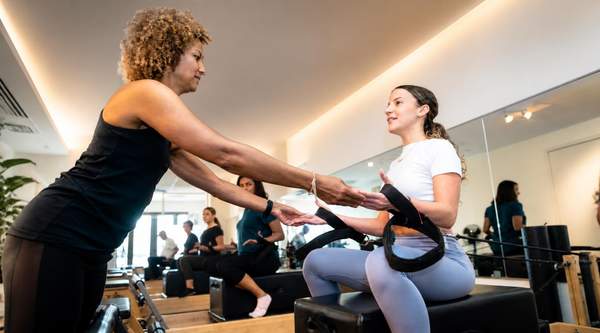
At some point during a Pilates class, you may begin paying attention to something beyond your own movement. You notice how the instructor explains a spring change, chooses a cue that makes an exercise easier to understand, or adjusts the sequence when someone needs a different approach.
That curiosity can lead somewhere interesting. Pilates Strong Studio offers Pilates teacher training in Coral Gables for those interested in developing their practice into an understanding of how to guide others. If you have begun wondering what it takes to stand on the instructor’s side of the room, the studio provides a local opportunity to investigate that possibility.
When Your Interest Moves Beyond the Exercise
Regular Pilates practice develops familiarity with the method. You begin recognizing exercises, understanding common instructions, and noticing how small changes in positioning affect the work.
Over time, you may become curious about the decisions behind those instructions. Why does an instructor change the spring resistance? What makes one cue effective for a particular movement? How can the same exercise be approached differently depending on the person performing it?
Understanding your own movement provides a foundation for becoming interested in how the method is taught, explained, and adapted. The exercises you already know become opportunities to examine the knowledge and judgment involved in guiding someone else.
Pilates Strong Studio emphasizes body mechanics, functional movement, posture, and moving through different planes. Those principles give prospective instructors substantial material to investigate as they consider developing their personal interest into a teaching practice.
Learn to Think About Pilates From the Instructor’s Perspective
Following an exercise and teaching it require different kinds of attention. As a participant, you concentrate on your own positioning, resistance, breathing, and control while responding to the instructor’s guidance.
An instructor has additional responsibilities. Teaching involves communicating the exercise, observing movement, selecting useful cues, and helping participants understand what they are being asked to do.