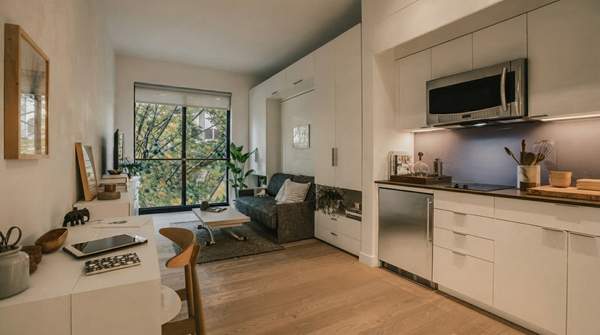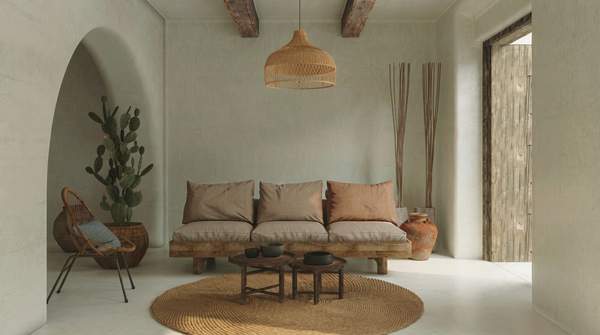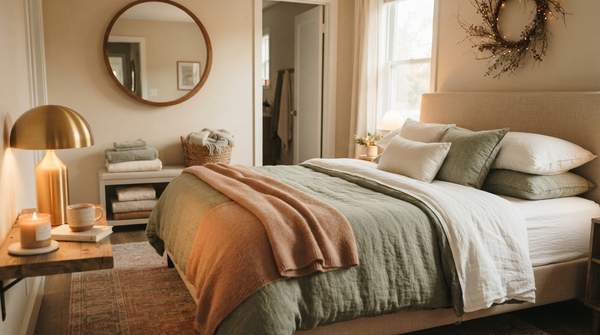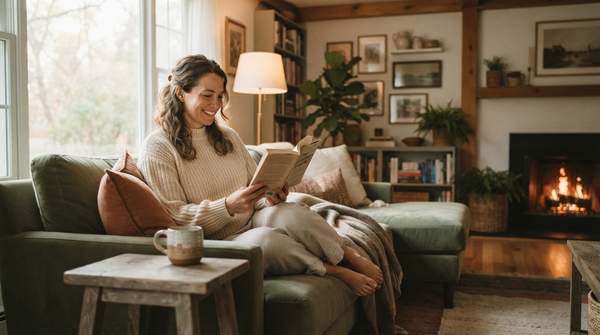
A cozy room is not an accident of style. It is an environment deliberately arranged so that your brain reads it as safe, warm, and familiar — and that reading has measurable consequences for how relaxed you feel. The good news is that coziness can be engineered: by choosing specific lighting temperatures, layering textures, curating personal objects, and arranging furniture for connection, you can intentionally cultivate the feelings you want most, whether that is security, stress relief, or warmth with the people you live with.
The Psychology of Coziness: More Than Just Aesthetics
When you walk into a truly cozy space, you don't just notice it — you feel it. That feeling has roots in how our brains process environmental cues. Over time, humans developed strong associations between comfort and security, and those instincts remain with us. We are more relaxed in spaces that feel warm, soft, calm, and familiar, because these qualities signal safety to the brain and allow the body to release tension.
Interior designer Kierstin Smyth frames design choices the same way: the way we arrange spaces, select colors, and incorporate materials isn't just about looking good — it's about creating an environment that responds to human needs and emotions. Lighting, for instance, is a critical factor in mood regulation, and colors function as psychological tools that shape how a room feels to be in.
Writers on the psychology of cozy spaces converge on a common definition: a cozy interior is one intentionally designed to promote relaxation, emotional comfort, and a sense of ease, so that people can slow down, disconnect from stress, and feel at peace. Coziness, in other words, is a psychological and physiological experience first, and a visual style second.
Your Cozy Home Design Decision Framework
Because different design choices serve different emotional goals, the most useful question is not "what makes a room cozy?" but "which feeling do I want this room to produce?" The matrix below sorts evidence-based tactics under the primary psychological goal each one supports, so you can prioritize interventions by the outcome you're after.
| Design choice | Primary psychological goal | Why it works |
|---|---|---|
| Soft textures — blankets, cushions, rugs, upholstered furniture | Increase feelings of safety and security | Softness sends signals to the brain that a space is safe and comfortable, contributing to ease and well-being. |
| Warm, layered lighting (ambient, task, accent) | Promote relaxation and reduce stress | Humans evolved under firelight and sunrises, so warm illumination around 2200–3000K generally feels more comfortable than cool artificial light; layered lighting adds visual depth and warmth. |
| Organized spaces with curated complexity | Promote relaxation and reduce stress | Excessive clutter increases cognitive load, stress, and decision fatigue, while balancing organization with personalization lets the mind settle rather than stay overstimulated. |
| Familiar and personal objects | Foster connection and warmth | Objects tied to memories and routines create emotional comfort, continuity, and a sense that the space is connected to your identity. |
| Warm color palettes — beige, soft brown, terracotta, olive green, cream | Foster connection and warmth | These tones are associated with comfort, stability, warmth, relaxation, and softness; overly saturated colors increase cognitive stimulation and reduce tranquility. |
| Conversational furniture layouts | Foster connection and warmth | Positioning seating to encourage conversation, keeping areas inviting, and creating small zones for reading or relaxing makes a room feel welcoming and larger. |
| Pleasant scents — candles, diffusers, fresh flowers | Sensory comfort | Scent is often overlooked in decorating, but it strongly affects how cozy a space feels and can trigger positive emotional responses. |
To use the framework, diagnose your room first. If it feels exposed or tense, start with the safety row: softness and warmth. If it feels overstimulating, address lighting and order. If it feels lonely or impersonal, focus on layout, color, and personal objects.
Layering Sensory Inputs for Deep Comfort
Coziness is multi-sensory, and the deepest comfort comes from layering inputs rather than optimizing one. Texture is one of the most overlooked elements: a room filled only with smooth surfaces can feel cold or impersonal, while textured fabrics, soft upholstery, natural wood grain, and woven surfaces contribute to perceived warmth even when the actual temperature is unchanged.
Lighting works the same way in layers. A hierarchy of ambient, task, and accent lighting generates visual depth and warmth, and warm color temperatures — roughly 2200–3000K for a living room, 2200–2700K for a bedroom — feel more comfortable than cool artificial light. As lighting designer Richard Kelly put it, "Light is not merely something that allows us to see. It is something that helps us feel."
Scent completes the picture. Writers on cozy home design suggest candles with soft fragrances like vanilla or lavender, essential oil diffusers, good ventilation, and natural elements like fresh flowers or herbs. Combined with a warm, muted color palette, these layers reinforce one another: the eye registers softness, the hand confirms it, and the scent anchors the memory of the room as a place of comfort.
Finding Your Balance: Curated Complexity Over Clutter or Minimalism
The most common confusion about cozy spaces is whether they should be full or sparse. The evidence points to a middle path. Coziness is not synonymous with clutter: excessive visual clutter increases cognitive load, stress, and decision fatigue. But completely sterile environments feel emotionally cold. The ideal cozy interior balances organization, personalization, and visual simplicity — a concept often called curated complexity.
Cozy spaces are not necessarily empty, but they are intentional. They include carefully chosen objects, balanced layouts, and clear visual flow, which allows the mind to settle rather than stay overstimulated. Familiar items — a favorite chair, a well-used blanket, personal décor — create emotional comfort because the brain connects them with previous moments of comfort, producing continuity and emotional stability.
Control matters too. When people feel they can adjust their environment — the lighting, the seating, the temperature — they feel more comfortable, and that sense of control reduces stress and increases satisfaction. Simple actions like adjusting a blanket, changing the lighting, or rearranging cushions give you ownership over your space, which is itself a source of comfort.
Practical Steps to Cultivate Coziness
Putting the framework to work in your own home can follow a simple sequence. First, choose the feeling you want the room to support — safety, relaxation, or connection — and consult the matching rows of the matrix. Second, address lighting: shift to warm color temperatures in the appropriate range and build ambient, task, and accent layers rather than relying on a single overhead fixture.
Third, add softness where your body actually contacts the room — blankets, cushions, rugs, upholstered seating — since these textures signal safety directly to the brain. Fourth, curate rather than clear: keep the personal objects that carry memories and routines, release the visual clutter that doesn't, and maintain clear flow between furniture. Fifth, arrange seating to encourage conversation, keep walking paths unblocked, and define small zones for reading or relaxing.
Finally, layer in scent and a warm, muted palette. These steps are general principles rather than universal rules — individual responses to design elements vary, and none of this substitutes for professional mental health care. But each intervention is tied to a documented psychological mechanism, from reduced cognitive load to the sense of control that comes from an adjustable environment.
Cultivating Your Cozy Sanctuary
The decision in front of you is to intentionally apply design principles related to lighting, texture, color, layout, and personalization to create a home environment that actively supports your psychological well-being — rather than leaving the atmosphere of your rooms to chance. You don't need a particular design style or a shopping list; you need a diagnosis of what each room currently lacks and the matching evidence-based intervention.
The measurable indicator of success is a noticeable shift in your own feelings of comfort, security, and relaxation when entering or spending time in the redesigned space, along with positive feedback from others about the atmosphere. That shift is your evidence that the psychology is working: a room your brain reads as safe, warm, and familiar is a room where your body can finally let go of tension.
Sources
- The Science of Cozy Interiors: How Architecture and Design Create Comfort, Warmth & Well-Being — Studiomatrx
- Modernlifestylejournal
- The Psychology of Home: Designing Spaces That Nurture Well-being — Kierstin Smyth Design
- The Psychology of Cozy Spaces: Why Some Rooms Feel Comfortable, and Others Don’t — Writers