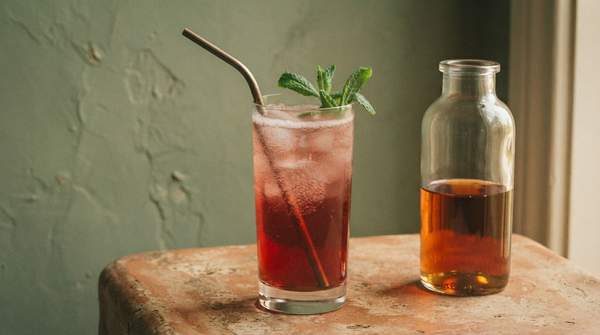
The secret to a great non-alcoholic cocktail isn't finding the perfect substitute spirit—it's understanding what alcohol actually does in the glass, then rebuilding those effects one sensory layer at a time. When I started mixing drinks without alcohol, my creations tasted like fancy fruit punch: sweet, occasionally tart, and thin. The turning point came when I stopped thinking about ingredients and started thinking about functions. Alcohol contributes warmth and bite, carries aroma, and adds a weight on the tongue that juice alone never delivers. Once you address each of those roles deliberately, a non-alcoholic drink can offer the layered, evolving experience of a real cocktail.
The Science of Balance: Replicating Alcohol's Role
Alcohol is doing far more in a cocktail than providing buzz. The flavor-development specialists at Flavorman, led by Chief Flavorist and Certified Flavor Chemist Tom Gibson, describe their work on non-alcoholic spirits as "turning water into whiskey"—an engineering problem as much as a culinary one. Their team works to simulate everything from the initial burn of a spirit to its cooling finish and lingering effervescence, while their research and development group perfects texture and mouthfeel, since spirits carry a thicker, more oily presence than water.
The halo of scientific efforts around alcohol alternatives points to the same challenge: alcohol contributes what researchers call a complex multisensory profile—a sharp initial burn that softens, tingling and numbing on the tongue, and a volatility that lifts aroma to the nose. Replicating that in a home drink means working through five components: sweetness, acidity, bitterness, aroma, and texture.
The Five-Component Framework for Non-Alcoholic Cocktails
Here is the diagnostic framework I use whenever I build or adapt a non-alcoholic recipe. Its purpose is simple: check each row before you serve, so nothing tastes flat, thin, or one-dimensional.
| Component | Role in the drink | Non-alcoholic tools and ingredients |
|---|---|---|
| Sweetness | Provides the foundational taste and prevents harshness; balances against acidity and bitterness | House-made syrups; fresh fruit juices |
| Acidity | Brightens the drink and keeps it from tasting flat or cloying | Citrus juices; vinegars in shrubs; tart fruit |
| Bitterness | Adds depth and mimics alcohol's burn and bite | Peppers, ginger, grains of paradise, menthol; tinctures and botanical bitters |
| Aroma | Engages the nose before and during sipping, shaping perceived flavor | Fresh herbs, flowers, spices, and expressed citrus—taste and aroma together create flavor |
| Texture | Replaces alcohol's weight and viscosity; adds a lasting, full-bodied feel | Carbonation and effervescence; non-alcoholic spirits formulated for mouthfeel |
The craft-mixing guide at A Bar Above, written by Chris Tunstall, describes how syrups, shrubs, and tinctures do more than sweeten—they carry tartness, herbs, spices, fruit flavors, and even peppers into a drink, building balance and complexity in a single ingredient. That is the real power of the framework: each component can be layered through the same handful of tools.
Sweetness: The Foundation of Flavor
Sweetness is where most home mixes go wrong—usually too much of it. In a balanced drink, sweetness is the foundation the other elements push against; without it, acidic and bitter notes can taste harsh and thin. De Soi's aperitif guidance notes that building non-alcoholic drinks with real complexity requires a creative blend of ingredients, and sweetness is the base layer of that blend. I prefer a light hand with syrup, tasting as I go, because citrus will amplify sweetness while bitter elements mute it.
Acidity: Brightness and Structure
Acidity is what makes a drink feel alive rather than flat. Fresh lemon or lime juice is the workhorse, but shrubs—fruit-infused vinegars—are the more interesting tool, because they deliver tartness together with fruit and spice character, so one ingredient covers two framework rows. When I taste a mocktail and it feels dull, my first move is acid, not more syrup. A splash of citrus or a spoonful of shrub restructures the whole glass, lifting the aromatics and sharpening the sweetness behind them.
Bitterness and Complexity: Mimicking Depth and Burn
This is the component that separates sophisticated non-alcoholic drinks from juice. The multisensory research summarized on halo.science explains that current efforts to mimic alcohol's sensations rely on ingredients such as peppers, ginger, grains of paradise, and menthol—though the same source cautions that these can linger or introduce off-notes where alcohol fades cleanly. Symrise, a flavor-house working on sophisticated non-alcoholic spirits, identifies cooling, tingling, fizzy, and bitter notes as the sensations that make an alcohol-free drink feel adult. Practically, a small piece of muddled ginger, a drop of peppery tincture, or a bitter botanical dash delivers that bite in miniature.
Aroma: Engaging the Olfactory Senses
Alcohol's volatility enhances aroma release—that is part of what makes a stirred whiskey drink smell so inviting before it reaches your lips. Non-alcoholic drinks need to rebuild that invitation with fresh material: bruised mint, a smacked rosemary sprig, an expressed citrus twist. Tunstall puts it plainly at A Bar Above: taste and aroma together create flavor. Because aroma is perceived before the first sip, it is also the cheapest complexity to add—a few fresh herbs change the entire experience of an otherwise simple drink.
Texture and Mouthfeel: The Missing Link
Texture is the most overlooked row, and the hardest. Flavorman's team notes that non-alcoholic versions are specifically crafted to replicate the lasting, full-bodied consistency of spirits, because spirits feel thicker and more oily than water. The master distiller guidance published by Bols Cocktails adds a crucial technical point: alcohol-free liquids lack the specific gravity of alcohol, which changes how they mix, making the physical behavior of ingredients essential to balancing a recipe. Carbonation is the home bartender's best fix—it adds effervescence and palate presence—while choosing non-alcoholic spirit brands formulated for body does the rest.
Crafting a Non-Alcoholic Negroni: A Deconstruction Example
Here is the framework applied, using a spirit-forward classic as a clearly labeled hypothetical build. A Negroni normally delivers bitterness from Campari, botanical complexity from gin, sweetness from vermouth, and a warming, oily weight from the alcohol itself—roughly equal parts of each. To rebuild it, I would map each role: a non-alcoholic botanical spirit replaces gin's aromatics; a bitter, citrusy aperitif substitute (or a pepper-and-orange tincture) replaces Campari's bite; a splash of sweet non-alcoholic vermouth substitute covers the sweet-and-botanical middle; and vigorous stirring, then dilution with sparkling water, restores the texture that missing alcohol would have carried. The point is not this specific recipe but the process: name what alcohol contributed, assign an ingredient to each job, and taste each row separately before combining.
One practical note from Bols's distiller guidance: alcohol is a natural preservative, so alcohol-free spirits typically need refrigeration after opening and should be consumed within 8 to 12 weeks to keep their delicate aromatics vibrant.
Elevate Your Home Bar: Crafting Beyond the Basics
The decision for any home bartender is to apply the five-component framework to consciously balance sweetness, acidity, bitterness, aroma, and texture in every non-alcoholic creation, rather than following one recipe after another. Run through the rows: Is there sweetness to stand on, acid to lift it, bitterness to give it age, aroma to invite the first sip, and texture to hold it all on the tongue? The measurable indicator of success is a non-alcoholic cocktail that offers a complex, satisfying, and multi-layered sensory experience, comparable to its alcoholic counterpart, rather than tasting like simple juice. Serve it to a skeptical friend, watch for the pause after the first sip, and you will know.
Sources
- The Art of Non-Alcoholic Spirits — Flavorman
- Novel approaches mimicking the sensory attributes of alcohol — HALO
- Guide to Craft Non-Alcoholic Cocktails - A Bar Above
- Non‑Alcoholic Aperitif: Crafting Fresh Flavors — De Soi
- Crafting sophisticated nonalcoholic Spirits by utilizing cutting-edge Technologies — Symrise
- The science and craft of alcohol-free spirits: A master distiller's gu — Bols Cocktails