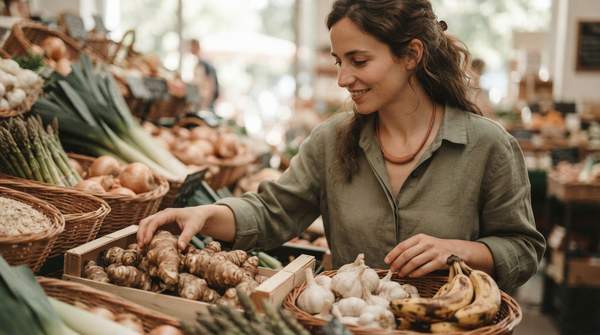
Prebiotics are the foods you eat not for yourself alone, but for the trillions of microbes living in your gut. Writing for Mayo Clinic Health System, nurse practitioner Amanda Gingrasso puts it simply: prebiotics "help the microbes already in your microbiome to grow by giving them the foods they like." Your gut houses up to 1,000 different species of bacteria, and what you feed that community matters. A balanced microbiome, she notes, promotes a healthy immune system and supports weight management. The practical takeaway is encouraging: most healthy adults can safely add prebiotic foods to their diet, and the most potent sources are ordinary grocery items — dandelion greens, Jerusalem artichokes, garlic, leeks, and onions top the list.
What Prebiotics Are — and How They Differ From Probiotics
Prebiotics and probiotics sound nearly identical, but they play different roles. Probiotics are the beneficial bacteria themselves; prebiotics are the food those bacteria eat. Think of a garden: probiotics are the plants you introduce, and prebiotics are the fertilizer that helps everything already rooted there flourish. That distinction matters because you don't need a specialty product to feed your microbiome — you need fiber-rich plants.
When I eat a spoonful of sautéed leeks, the prebiotic fibers they contain resist digestion in my small intestine and travel to the colon, where gut bacteria ferment them. Research on oats illustrates where this pathway leads: a randomized controlled trial examined the prebiotic effects of oats on blood lipids, gut microbiota, and short-chain fatty acids in people with mildly high cholesterol, and related animal research has explored how oat beta-glucan and oat resistant starch affect insulin resistance, inflammation, and gut microbiota. In other words, feeding gut bacteria produces measurable compounds and effects beyond the gut itself.
Onions offer a concrete example of the mechanism at work. According to WebMD, onions contain inulin and FOS — two recognized prebiotic fibers — which can strengthen gut health and support the immune system. Researchers with the American Society for Nutrition found that onions and related foods contain multiple forms of prebiotics, which is why their total prebiotic content is so high. Experts are still learning about the full range of prebiotics' health benefits, so it's best to treat these foods as a well-supported foundation rather than a cure-all.
Top Prebiotic Food Sources for a Healthy Gut
Not all prebiotic foods are created equal. When scientists reviewed the prebiotic content of common foods, reported by the American Society for Nutrition, five stood out: dandelion greens, Jerusalem artichoke, garlic, leeks, and onions contained the greatest amounts, ranging from about 100–240 milligrams of prebiotics per gram of food. A second tier — including asparagus and cowpeas — contained around 50–60 mg/g. Other foods, like underripe bananas and oats, are consistently listed as prebiotic sources, though the evidence I can point to doesn't quantify their density the same way.
| Food Source | Food Group | Relative Prebiotic Density | Simple Serving Idea |
|---|---|---|---|
| Dandelion greens | Leafy vegetable | Highest tier: about 100–240 mg/g | Toss raw into a salad with olive oil |
| Jerusalem artichoke | Root vegetable | Highest tier: about 100–240 mg/g | Roast as a side dish |
| Garlic | Allium vegetable | Highest tier: about 100–240 mg/g | Mince into soups and dressings |
| Leeks | Allium vegetable | Highest tier: about 100–240 mg/g | Sauté and fold into grain bowls |
| Onions | Allium vegetable | Highest tier: about 100–240 mg/g; contain inulin and FOS | Add raw to salads or cooked into stews |
| Asparagus | Vegetable | Moderate tier: about 50–60 mg/g | Roast or steam as a side |
| Cowpeas | Legume | Moderate tier: about 50–60 mg/g | Stir into soups and stews |
| Underripe bananas | Fruit | Listed as a prebiotic source; not quantified in the cited research | Slice onto morning oatmeal |
| Oats | Whole grain | Listed as a prebiotic source; not quantified in the cited research | Enjoy as a warm breakfast bowl |
Two things strike me when I read this table. First, the allium family — garlic, leeks, and onions — dominates the top tier, and the research suggests that's because these foods contain multiple forms of prebiotics rather than just one. Second, the highest-density foods are inexpensive, widely available, and already at home in most kitchens. You don't need exotic ingredients to feed your microbiome well; you need the produce aisle.
One honest caveat: the density figures above come from a preliminary literature review, and the evidence doesn't specify the exact prebiotic fiber types for every food. Onions are the clearest case, with inulin and FOS documented. For the others, the safest reading is that they are prebiotic-rich, with the top five measurably denser than the rest.
Incorporating Prebiotics into Your Daily Meals
Knowing that garlic is prebiotic-rich is one thing; actually changing what lands on your plate is another. The good news is that the top prebiotic foods double as flavor foundations. Onions and garlic appear, as the nutrition researchers observed, in a variety of dishes as both flavoring and main ingredients — so nearly any soup, stew, stir-fry, or sauce you already make is an opportunity. Leeks can stand in for or alongside onions; asparagus and Jerusalem artichokes make easy roasted sides; dandelion greens bring a pleasant bitterness to salads.
Start small and go slow. If your current fiber intake is low, a sudden pile of prebiotic-rich vegetables can cause temporary bloating or gas as your gut bacteria adjust. Adding one new source at a time — a handful of onions here, a serving of asparagus there — lets your microbiome adapt comfortably. And variety matters as much as quantity: because different bacteria prefer different fibers, rotating through the foods in the table feeds a broader range of microbes than eating the same one daily.
Pairing helps, too. Oats with sliced underripe banana covers two sources at breakfast; a lunch salad of dandelion greens with raw onion adds two more; a dinner built on garlic, leeks, and cowpeas brings the day full circle. None of this requires special products or supplements — just a shopping list that leans on the produce aisle, the bulk bins, and the allium basket.
Making Prebiotics a Part of Your Daily Routine
The decision here is simple: prioritize incorporating a diverse range of prebiotic-rich whole foods into your daily diet to support gut health. You don't need to memorize milligram figures — just let garlic, onions, leeks, asparagus, Jerusalem artichokes, dandelion greens, cowpeas, oats, and underripe bananas rotate through your meals over the course of a week.
How will you know it's working? Observe increased dietary fiber intake and a greater variety of plant-based foods in your meals over time. That's the measurable indicator: more fiber on your plate, more different plants across your week. Your gut bacteria will take it from there.
Sources
- Gut health: prebiotics and probiotics — Mayo Clinic Health System
- Foods High in Prebiotics — WebMD
- Scientists name top five foods rich in prebiotics – American Society for Nutrition