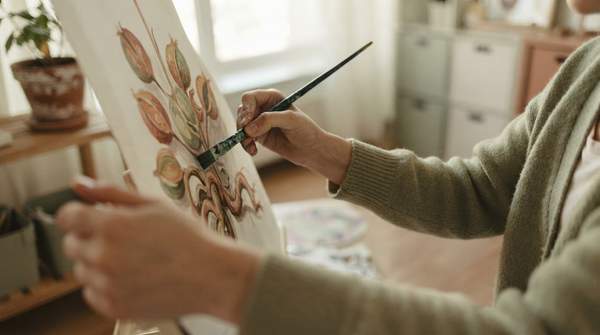
The mental health benefits of art depend less on talent and more on how you engage with it. A preregistered large-scale study found that viewing art in a museum improved subjective well-being and lowered stress, with the stress benefits most pronounced among participants who started the study with high stress levels. Health guidance from the University of Arizona Health Sciences describes how creating art supports mood and emotional processing, while group activities like shared art-making build belonging and reduce isolation. The key insight is that these are three distinct modes of engagement—viewing, creating, and social participation—each mapped to a different psychological benefit.
Understanding Art Engagement for Well-being
"I don't think you have to be a Walt Whitman or a Picasso, so to speak, or a Monet, to be engaged in the benefits of art," psychiatrist Frank Clark told the American Medical Association in a 2023 interview. "Just a couple of minutes a day can be therapeutic for people." Clark compares creative practice to physical exercise, arguing for what he calls "creative fitness" as a component of overall well-being, alongside the exercise we already accept as good for body and mind.
That framing matters for readers who assume art requires ability, materials, or hours of free time. The University of Arizona Health Sciences guidance is explicit on this point: you don't need a studio or special equipment to benefit. Even small, consistent moments of creative engagement—playing music while cooking, keeping a sketchbook for emotional check-ins—can make a difference in daily life.
Equally important is what this kind of everyday engagement is not. It is not a treatment for a mental health condition, and the evidence behind formal art therapy remains limited. Understanding both the promise and the boundaries of art's psychological effects is what turns a pleasant hobby into a deliberate well-being practice.