In The After Party, an aspiring rapper has a seizure and winds up with a nickname he never chose. In Electricity, a woman with epilepsy travels to London to find her brother and give him his share of an inheritance. In one story a crowd decides what to call someone, while in the other the audience follows what a woman came to London to do.
Put those two choices side by side and you get a way to think about epilepsy in film. Pay attention to what happens once the scene has caught your eye. You might spend the next few minutes seeing what the people around a character make of the event, or you might find out what the character was trying to do before it happened and why they want to get back to it.
When a Seizure Becomes a Nickname
In the 2018 comedy The After Party, Owen wants an audience for his music. After he has a seizure, the name “Seizure Boy” gives people a way to recognize him that has little to do with what he wants them to hear. The Epilepsy Foundation publicly objected to the use of the seizure as material for ridicule.
The nickname lets other characters summon the whole incident without having to describe it. Owen came into the story wanting to be known for a skill he’d put time into. What people are willing to share about him travels faster than the work he hoped they’d listen to.
The way the footage circulates extends the scene beyond the club. Someone holds up a phone as Owen collapses, and the clip goes viral. The story can now bring that public moment into rooms where nobody saw it happen, and people can recognize Owen from the clip before they’ve ever heard his music.
When the Audience Goes Looking With Lily
In the 2014 film Electricity, Lily O’Connor learns that the brother she believed was dead may still be alive. She leaves the seaside town where she works in an arcade and goes looking for him. She wants to give him his share of an inheritance, and the audience comes to understand why an interruption costs her something.
Director Bryn Higgins described designing the film to stay close to Lily and move into her point of view during hallucinations and seizures. The production also consulted epilepsy specialist Dr. Gonzalo Alarcón on the portrayal.
A review in The Guardian noted how the film conveys Lily’s frustration at ambulance journeys that get in the way of her search. Getting to her brother is still on her mind, even when an ambulance takes her somewhere else.
In The After Party, the phone gives the crowd something to pass around. In Electricity, the camera stays close to Lily so the audience experiences more of the interruption with her. Watch what sticks after the scene ends, whether it’s the clip people keep talking about or the person trying to get back to what she was doing.
What a First-Person Account Has Time For
Sallie Baxendale’s review of 21 films released between 2000 and 2014 found that epilepsy often marked a character as different, frequently in a negative way. The review predates The After Party, but it suggests a question to take into either film. Once you’ve seen what the story does with a seizure, how much have you learned about the person who experienced it?
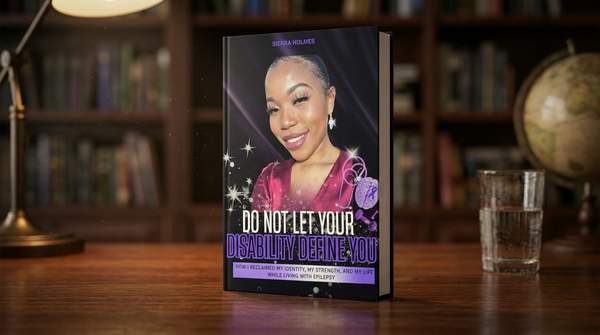
Sierra Holmes puts a different question at the center of Do Not Let Your Disability Define You, an ebook from Neuro-Dynamic World. She writes about what living with epilepsy has meant to her identity and self-worth.
A change in the camera’s point of view can give you a sense of how a moment felt to a character. Holmes’s memoir has room for a different kind of change, the one you can sometimes only describe once you’ve had time to think about who you were before it happened.
A striking image can stay with you for years. So can a passage that gives you words for something you’ve noticed but never said. Holmes writes about acceptance and self-trust, giving some of that space to changes in how she sees herself that would be hard to show in a single scene.
A first-person narrator also decides where to begin and what to leave unexplained. Holmes puts the work of reclaiming her identity right in the subtitle. That tells you what she wants to stay with, even if you pick up the book expecting to learn chiefly about her seizures.
Frequently Asked Questions
What does a seizure scene tell you about a character’s condition?
It can show what happens in that particular scene. Whether a character has epilepsy depends on what the story establishes about them, since a seizure on its own can have other causes.
What did a medical consultant contribute to Electricity?
Gonzalo Alarcón advised the production on portraying Lily’s epilepsy, including the limits of the visual hallucinations the film depicts. His input helped the filmmakers develop the portrayal of this particular character’s experience.
What kind of account does Sierra Holmes offer?
Holmes describes living with epilepsy from her own point of view. The questions of identity and self-worth belong to her experience, which she gets to describe in her own terms.
Stay With the Person After the Credits
The next time a film about epilepsy ends, think about what you’d ask the character if you could sit down with them after the credits. At Neuro-Dynamic World, you can see which questions Sierra Holmes chose to take up in her own story. Get Do Not Let Your Disability Define You and see what comes into view when the person living with epilepsy gets to decide where the story goes.