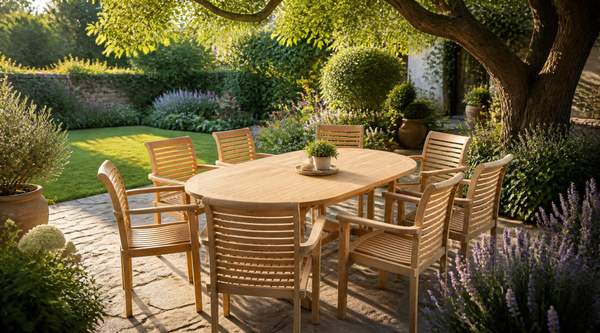
The garden looks exactly as you planned in daylight. Then evening arrives, and the path through the beds, the edge of the lawn, and the route back to the patio begin to disappear into one dark stretch.
Grow & Dig Solar Pathway Lights give those lines a visible presence after sunset without adding a wired lighting project to the yard. Their solar charging, automatic dusk-to-dawn operation, ground-stake installation, warm-white setting, seven-color RGB mode, and IP67 waterproof rating make them suited to paths and garden edges where both appearance and easy placement count.
Light the Route You Already Use
Pathway lighting works best when it follows the yard rather than competing with it. A few well-positioned lights can pick up the curve of a walkway, mark the edge of a planting bed, or lead the eye from the patio toward another part of the garden.
That gives placement a purpose beyond filling dark patches. Along a path, the fixtures can repeat the route at measured intervals. Around a bed, they can preserve the boundary between lawn, mulch, and planting after those textures become harder to distinguish in low light.
The stake format supports that kind of layout because each light is positioned individually in the ground. You can follow a curved border, frame a straight walkway, or place the fixtures around existing landscaping without planning a cable route between them.
Warm White Keeps the Garden in Focus
Warm-white light suits evenings when you want the garden itself to remain the main attraction. The softer color can trace a path while letting plants, paving, fences, and outdoor furniture keep their familiar appearance.
That makes the setting useful for everyday evenings rather than only decorative occasions. A line of warm-white lights along a garden path can create enough visual rhythm to keep the route present without making the fixtures look like the dominant feature.
Placement can reinforce that restrained effect. Instead of concentrating every light in one area, spacing them along changes in direction, bed corners, or transitions between lawn and paving can create a more deliberate nighttime layout.