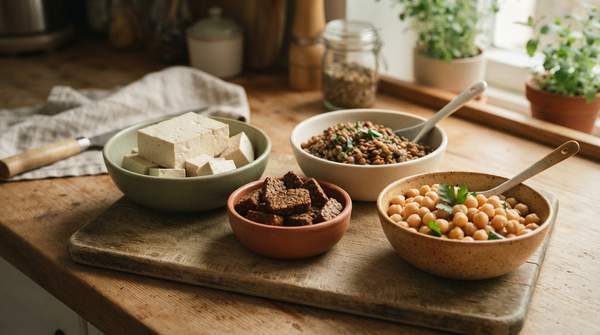
If you want the most protein per bite, tempeh wins: it delivers about 20.7g of protein per 100g, ahead of tofu at 16.5g, boiled lentils at 8.8g, and canned chickpeas at 7.2g. But protein density is only one part of the decision. The right choice for your meal also depends on how much time you have, what texture you're craving, and how much flavor the protein will absorb on its own. Here's how I think about the four most versatile plant-based proteins, and how to pick between them.
Choosing Your Plant-Based Protein: A Quick Comparison
When I started cooking more plant-based meals, I treated these four proteins as interchangeable. They're not. Registered nutritionist Nicola Shubrook, writing for Good Food, notes that tempeh is the richest in protein of all the soya products, while tofu can be baked or stir-fried in many ways. Both are soy-based, which matters nutritionally: soya provides all nine essential amino acids, making it a complete protein. Lentils and chickpeas, by contrast, are lighter in protein per 100g but bring their own strengths—speed, heartiness, and adaptability.
One caveat worth keeping in mind: these figures are reported per 100g for firm tofu, tempeh, boiled and drained lentils, and canned chickpeas, and they can vary slightly by brand, preparation, and cooking method. As Shubrook advises, always check labels, because the nutritional profile may differ from product to product.
Plant-Based Protein Comparison for Home Cooks
This table is the decision matrix I use when meal planning: it places the protein numbers alongside Health Canada's preparation guidance and each protein's best culinary role, so you can match the ingredient to your goals, your schedule, and the texture you want on the plate.
| Protein Source | Protein (per 100g) | Key Preparation Step | Best For (Texture/Use) |
|---|---|---|---|
| Tempeh | 20.7g | Marinate before cooking to add flavour | Firm, nutty texture; grilling, baking, stir-fries, hearty dishes |
| Tofu | 16.5g | Press to remove excess water, then marinate | Customizable texture from soft to crispy; stir-fries, baking, grilling |
| Lentils | 8.8g (boiled and drained) | Rinse dried lentils; no overnight soaking needed | Hearty, earthy base for soups, stews, and salads |
| Chickpeas | 7.2g (canned) | Rinse canned chickpeas to reduce sodium | Curries, salads, and blended into hummus |
Read one way, the table says soy is your efficiency play: tempeh and tofu deliver roughly two to three times the protein per 100g that the legumes do. Read another way, it says lentils and chickpeas ask far less of you at the stove—especially from a can.