If your ideal winter trip involves lingering over ruins, dumplings in a mountainside hut, or snow-covered silence rather than ski lifts and Christmas market crowds, Europe offers three very different slow travel experiences worth comparing. A Mediterranean winter in Sicily or Malta trades beach days for empty archaeological sites and lower prices. Slovenia's alpine region offers medieval towns and serene valleys that one slow travel writer describes as an "immersive deep dive into Narnia." And Rovaniemi, the capital of Finnish Lapland, delivers the classic snowy Arctic setting. Here is how the three compare, and how to choose between them.
Mediterranean Charm: Sicily and Malta in the Off-Season
The strongest case for a culturally immersive winter trip may be the Mediterranean. As the travel blog Our Escape Clause points out, visiting Sicily in January or February rules out beach time entirely—but that constraint is precisely what makes winter the island's best season for cultural travel. With the sun-seekers gone, a winter trip lets you take advantage of even more affordable prices than usual while appreciating the island's cultural sights at an unhurried pace.
The itinerary practically writes itself for a slow traveler. Kate Storm, who writes the blog, recommends marveling at the Valley of the Temples in Agrigento, getting lost in Ortigia, tasting the chocolate of Modica, admiring the views from Taormina's Greek Theater, and touring Palermo's impressive cathedral. Her site also highlights a food and history tour in Palermo as a standout experience. Even Mount Etna remains accessible in winter, when you may see the volcano covered in snow—a striking collision of Mediterranean and alpine imagery in a single view.
What makes this region distinct as a slow travel choice is that the off-season doesn't diminish the destination; it reveals it. The activities are centered on heritage and local life rather than weather-dependent attractions, so nothing essential is lost by traveling in the coldest months. Instead, you gain the version of these islands that residents experience: quieter streets, room to linger, and the space to appreciate centuries of layered history without queueing for the privilege.
Alpine Serenity: Slovenia's Soca Valley
For travelers whose idea of immersion is landscapes and local food culture rather than ancient ruins, Slovenia offers a different register of winter slowness. Lori Sorrentino, who writes the slow travel blog Travlinmad, calls Slovenia's Soca Valley "perfect for traveling slow" and describes the experience as an "immersive deep dive into Narnia"—a fitting image for a region defined by alpine majesty and emerald waters.
The cultural texture here is quieter but no less real. In the town of Kamnik, Sorrentino writes, medieval charm mingles with local crafts and culinary traditions. She points travelers toward the Arboretum Volčji Potok and Kamnik Castle, and—most appealing for a winter visit—toward a mountainside hut where local Slovenian flavors are best savored, with dishes like žlikrofi, a regional dumpling, and hearty bean soups on the menu. That combination of a cold-weather walk and a warming traditional meal is slow travel at its most literal.
Sorrentino's broader argument about Slovenia is that its serene corners still belong to the local Alpine culture, nature, and authentic flavors that define the destination. That framing matters for the intentional traveler: this is a place where the pace of daily life, not a tourism infrastructure, sets the rhythm. Her blog also notes nearby stays in the region, including cabin-style accommodations with gardens and spa facilities in Kamnik, suited to travelers who want to settle in rather than pass through.
Arctic Magic: Finnish Lapland's Winter Wonderland
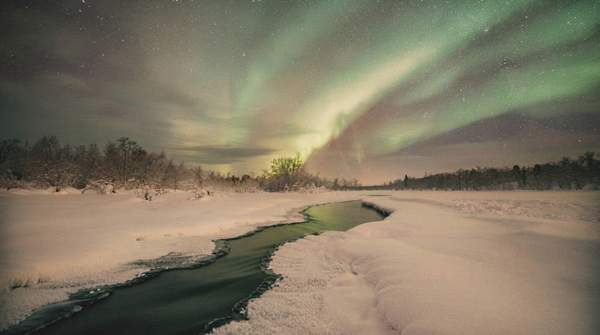
The third option is the one most people picture when they hear "winter in Europe," but framed for slow travel rather than quick-hit tourism. Rovaniemi, described in destination coverage as the capital of Finnish Lapland, offers what that coverage calls the snowy magic of a genuine winter wonderland. Where Sicily in winter is about what remains after the crowds leave, Lapland is about what only exists in the cold months: deep snow, polar atmosphere, and the classic Arctic setting.
For a culturally focused traveler, the appeal is a different kind of authenticity—the experience of a far-northern European winter itself, in the city that serves as Lapland's capital. This is the highest-contrast choice of the three: it demands the most from you in terms of cold and distance, and it delivers an atmosphere the Mediterranean and the Alps simply cannot replicate. It is best suited to travelers who define immersion as total environmental change rather than layered history or regional cuisine.
The trade-off to weigh honestly is intensity versus depth of cultural engagement. The evidence for Rovaniemi's winter character is solid, but the destination coverage supporting this guide emphasizes atmosphere over the specific cultural sites and food traditions documented for Sicily and Slovenia. If your slow travel ideal is built around named museums, ruins, and regional dishes, the Mediterranean and Alpine options come with richer documented itineraries; if it is built around snow itself, Lapland is the match.
Comparative Guide to European Winter Slow Travel Destinations
The table below contrasts the three destination types across the criteria that matter most to a slow traveler: what each place is, how winter feels there, what the primary focus of a trip would be, and what you would actually do. Read it as a decision aid—each row represents a different definition of "culturally immersive."
| Destination | Profile | Winter Vibe | Primary Slow Travel Focus | Cultural Immersion and Activities |
|---|---|---|---|---|
| Mediterranean Culture (Sicily/Malta) | Islands rich in history and culture, with milder winter weather | Cities without summer crowds; more affordable off-season prices | Deep cultural exploration of heritage sites and local life | Valley of the Temples, Ortigia, Modica chocolate, Taormina's Greek Theater, Palermo's cathedral and a food-history tour; Mount Etna, possibly snow-capped |
| Alpine Nature (Soca Valley, Slovenia) | Alpine majesty and emerald waters; a region likened to Narnia | Serene, tranquil, uncrowded corners | Local Alpine culture, nature, and authentic flavors | Kamnik's medieval charm, local crafts, Kamnik Castle, Arboretum Volčji Potok, and hut dishes like žlikrofi dumplings and bean soups |
| Arctic Magic (Finnish Lapland) | Rovaniemi, capital of Finnish Lapland | Classic snowy winter wonderland | The Arctic winter experience itself | Immersing in the deep-snow polar setting of Lapland's capital |
The comparison reveals the core trade-off. Sicily and Malta offer the most documented cultural depth and the clearest off-season advantage—lower prices and empty sites—but no beach and no snow. The Soca Valley area balances nature and culture, with medieval towns and hearty food, in a setting defined by tranquility rather than monuments. Lapland offers the most dramatic seasonal transformation but, on the evidence gathered here, the thinnest documented layer of specific cultural activities.
Choosing Your Winter Slow Travel Adventure
Match the destination to your definition of immersion. If your ideal winter day is a long morning at an ancient temple followed by chocolate in a baroque town, the Mediterranean off-season is the strongest fit, and the affordability of a January or February trip rewards the choice directly. If you want cold air, mountain scenery, and a dumpling lunch in a hut between a castle and an arboretum, Slovenia's alpine region delivers that balance. If the point of winter travel is to be somewhere that winter has fully arrived, Rovaniemi is the classic answer.
One honest caveat about this guide: it synthesizes existing travel reporting rather than firsthand testing, it skips logistics like flights and accommodation pricing, and its discussion of sustainability stays at the level of slow travel principles—off-season travel that spreads visitation beyond peak months—rather than formal eco-certifications for any of these places.
Plan Your Culturally Immersive Winter Escape
Choose a European winter destination based on your preference for cultural depth, natural serenity, or unique Arctic experiences, leveraging the off-season benefits of fewer crowds and authentic local engagement. The measurable next step: select a destination type—Mediterranean, Alpine, or Arctic—and begin researching the specific cultural sites and activities named for that region, whether that is the Valley of the Temples and Modica's chocolate, Kamnik Castle and a bowl of žlikrofi, or Rovaniemi's snowy Lapland setting. Whichever row of the table you pick, you will have moved from a vague winter daydream to a concrete, evidence-backed itinerary.