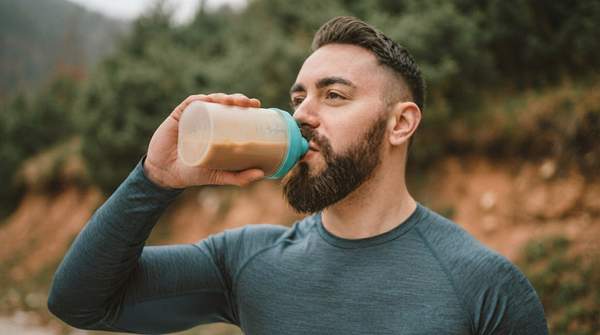
For most people training hard and wanting a stomach that agrees with them, the answer is a pea and rice blend. That pairing is the one option that gets close to a complete amino acid profile without soy, and pea and rice proteins are also among the gentler plant sources for digestion. Soy isolate is the strongest single-ingredient choice if you tolerate it well; rice or pea alone leaves measurable gaps in your essential amino acids. Here is how the trade-offs break down, source by source.
Understanding Plant Protein for Functional Fitness
Muscle building is, at bottom, an amino acid question. Your body needs all nine essential amino acids in sufficient amounts to synthesize muscle protein, and a powder can list 25 grams of protein per scoop while still leaving gaps if one or more of those aminos is missing or low. Tiger Fitness's ranking of vegan proteins by amino acid completeness singles out lysine, methionine, and leucine as the three amino acids most vegan protein sources fall short on individually.
Leucine deserves special attention if your goal is functional fitness. As registered dietitians quoted by Kelli McGrane's Yahoo Health guide explain, plant-based powders are typically lower in leucine than whey, and leucine is a key amino acid for muscle protein synthesis. To match whey's benefits, a slightly larger serving of plant protein may be needed . Alternatively, a blend of plant protein sources, such as pea and rice, can provide a more complete amino acid profile and ensure adequate leucine intake . For instance, a pea and rice blend combines pea protein's high leucine content with rice protein's methionine to create a complete profile necessary for muscle recovery .
This is why the source matters more than the marketing on the tub. Two powders with identical protein counts can behave very differently in your body depending on which amino acids are actually present, and in what ratios. The comparison below is built on that logic.
Plant Protein Source Comparison for Fitness & Gut Health
| Protein Source | Amino Acid Profile (Completeness) | Key Amino Acids for Muscle Growth | Digestibility & Gut Health Factors |
|---|---|---|---|
| Pea protein isolate | Often incomplete on its own; methionine is a common limiting amino acid | Rich in lysine, the amino acid grains lack; lower in leucine than whey, so serving size matters | Generally gentle and easily digestible; suitable for digestive comfort |
| Brown rice protein | Often incomplete on its own; lysine is the common limiting amino acid | Good source of sulfur-containing amino acids, which legumes lack | Tends to be gentle and easily digestible |
| Soy protein isolate | Complete protein with all nine essential amino acids; PDCAAS of 1.0 | Full essential amino acid profile without needing a second source | May not suit people with soy allergies or thyroid-related concerns, which can cause digestive discomfort or other adverse effects |
| Pea + rice blend | Complementary: pea covers lysine, rice covers sulfur-containing aminos; blends of 40–90% pea protein can achieve a PDCAAS of 1.00 | Closest to a complete profile without soy; supports balanced essential amino acid intake for muscle synthesis | Both components are gentle, digestible sources; well suited to sensitive stomachs |
The reasoning behind the blend row comes from nutritional science literature on plant protein quality: lysine is often limiting in grain proteins, but grains are good sources of sulfur-containing amino acids, while legumes are rich in lysine but limiting in sulfur-containing amino acids. Consuming the two over the course of the day lets them complement one another, and pea–rice blends ranging from 40 to 90 percent pea protein can reach a PDCAAS of 1.00 using the FAO's 2011 amino acid reference pattern for adults.
On quality scores, Tiger Fitness's ranking places soy protein isolate at a PDCAAS of 1.0, pea protein isolate at 0.89, and rice protein in the 0.5–0.7 range. Their bottom-line guidance for 2026: default to a pea plus rice blend if you haven't picked a specific product, choose soy isolate if you want one ingredient and have no soy sensitivity, and skip rice protein as your only source, using it as half of a blend instead.
Optimizing Plant Protein for Gut Health
Amino acid completeness is only half the decision. The other half is how a powder sits in your stomach, and here the plant world has a genuine advantage. Happy Viking's guide to plant-based protein for recovery notes that whey and casein may cause bloating or discomfort, especially for people with lactose sensitivity, while plant proteins from pea and rice sources tend to be gentler.
Then there is what sits alongside the protein. According to the same guidance, when pea and rice proteins are paired with soluble fibers like acacia and researched probiotic strains, a vegan recovery shake can support gut health while delivering nutrients. In other words, the best powders keep going beyond the protein itself.
When you read a label, look for three categories of gut-support additions:
- Soluble fiber, such as acacia, which adds prebiotic bulk without the grit or fermentation issues some fibers cause.
- Probiotic strains, ideally ones the manufacturer identifies by name, since "researched strains" is doing real work in that claim.
- Digestive enzymes, which some formulations add to help break down the protein itself.
Interest in plant powders for digestive reasons is not a niche instinct. "Some people may prefer it for the sake of ethical or environmental reasons, and maybe even for digestive reasons too," Topol, a clinician quoted in Bon Appétit's vegan protein powder review, says of why he recommends plant-based powders to many of his patients.
Making Your Choice: Balancing Fitness and Digestive Needs
Put the two halves together and the decision framework looks like this. If your priority is maximum muscle-building efficiency from a single ingredient and you have no soy sensitivity, soy protein isolate is the complete-protein choice with the top quality score. If soy is off the table, whether from allergy, thyroid-related concerns, or simple preference, a pea and rice blend is the strongest alternative, because the two sources cover each other's limiting amino acids.
If your priority is digestive comfort above all, pea and rice are the gentle, easily digestible foundations, and a blend of the two with added soluble fiber, probiotics, or digestive enzymes gives you gut support alongside the protein. What you should avoid, per the amino acid evidence, is relying on rice protein alone, since its low lysine content makes it the weakest solo performer of the group.
Two honest caveats belong here. This comparison covers protein source types, not specific commercial products, and actual formulations vary, so a "pea and rice blend" from one brand can differ meaningfully from another. And none of this is medical advice; if you have a diagnosed digestive condition or a soy allergy, that is a conversation for a clinician, not a supplement label.
Choosing Your Ideal Plant-Based Protein
The decision, distilled: select a plant-based protein source by prioritizing either a complete amino acid profile, such as a pea/rice blend or soy, for muscle building, or specific gut health support, such as pea/rice with added probiotics or enzymes, based on your individual needs. For most functional fitness goals, the pea/rice blend is the option that satisfies both priorities at once.
How will you know your choice worked? The measurable indicator is improved workout recovery and digestive comfort after consistent use of your chosen powder. Watch for two things over your first weeks: whether post-training soreness and recovery feel supported, and whether you experience less of the bloating or discomfort that dairy-based powders can trigger. If either signal moves the wrong way, the framework above tells you exactly which variable to change first, the source, or the gut-support ingredients around it.
Sources
- Vegan Protein Ranked by Amino Acid Completeness 2026 — Tiger Fitness
- The 6 best vegan protein powders of 2025 for plant-powered performance — Yahoo Health
- How to Choose the Best Plant-Based Protein Powder for Post-Workout Recovery — Happy Viking
- The Best Vegan Protein Powders for People With Good Taste — Bon Appétit