Sustainable fashion is usually framed as a question of brand ethics, but the evidence points somewhere more practical: a garment's real environmental weight is spread across its whole life, and you influence it at three distinct moments. Before you buy, you can assess materials and construction. While you own it, your washing, drying, and repair choices reshape its footprint. At the end, resale or recycling determines whether its embedded impact pays off. This article turns Life Cycle Assessment (LCA) research and slow fashion principles into a three-stage checklist you can apply to any piece of clothing.
Embracing the Slow Fashion Mindset
Slow fashion is not simply the opposite of fast fashion. As Dominika Ruzova explains in her guide for the studio DORUZOVA, it is "a different mindset in which designers, manufacturers, retailers, and consumers are more aware of the impacts of products on workers, communities, and ecosystems." The movement draws on a time before industrial production, when garments were locally sourced, hand-produced, and worn for years.
The contrast with fast fashion is structural, not just aesthetic. Fast fashion garments are, in Ruzova's words, "designed with planned obsolescence in mind—they are engineered to fall apart after a few wears." Seams unravel, fabrics pill, zippers break, and the cycle of replacement begins again. Slow fashion inverts this: fewer, better pieces, produced in limited quantities, intended for long-term ownership.
The financial logic supports the philosophy. Ruzova offers a worked example: a $120 pair of jeans worn 200 times over five years costs $0.60 per wear. Thinking in cost-per-wear rather than cost-per-item reframes a higher price as a bet on longevity—one that only pays off if the garment actually survives.
Understanding Environmental Hotspots in Clothing Lifecycle
Why do the checklist criteria matter? Because a garment's footprint is not evenly distributed. A systematic review of LCAs in the fashion industry by Komal Dhiwar and Madhura Bedarkar, published in Discover Sustainability, identifies where the heaviest impacts fall—and some findings cut against intuition.
Fiber choice matters upstream: recycled cotton avoids cultivation impacts entirely and gains a substantial water-scarcity advantage over virgin cotton, while LCAs indicate lower production inputs for organic cotton relative to conventional systems. But the review also reports that downstream wet processing—dyeing and finishing—often emerges as the hotspot, exceeding first-order farming impacts regardless of fiber type. Recycled cotton, for instance, still faces the same processing burdens as virgin cotton. In wool studies, scouring and transporting raw wool are the most significant upstream impacts.
The use phase can shift the entire profile. Dhiwar and Bedarkar note that consumer behavior—wash frequency, longevity, and drying—"can dramatically shift the impact profile," and that researchers increasingly call for LCAs to model care practices rather than treating garments as static products. A thredUP-commissioned LCA on resale textiles makes the same point from the reuse side: extending a garment's service life spreads its production impacts across more wears, and future product category rules are expected to formalize how reused garments' lifespans are measured.
Stage 1: Pre-Purchase Evaluation - Materials and Construction
The first stage happens at the rack, before money changes hands. The Future Observatory's Garment Lifecycle Map—an interactive tool developed by researcher Forst with UX designer Jonas Zieher for the Tomorrow's Wardrobe exhibition—was built on exactly this insight: decisions made "at the beginning of the garment's manufacture to the end of the garment's life" are surprisingly influential, and demystifying them raises consumer awareness of where the footprint is heaviest.
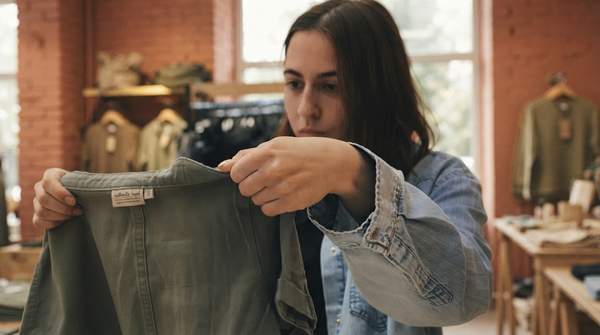
Practically, look for signs of durability: tight, even stitching; substantial fabric weight; reinforced seams; and materials suited to how you will actually wear the item. Ask whether the design is timeless enough to survive trend cycles, since longevity depends on your willingness to keep wearing it. Consider the fiber's known profile—natural fibers biodegrade and avoid the microplastic shedding that synthetics release with every wash, per Ruzova's comparison—while remembering that fiber choice reduces upstream impacts but does not erase downstream dyeing and finishing burdens.
Stage 2: Use Phase Evaluation - Care and Repairability
Once you own a garment, you control the stage that LCA research says can dramatically reshape its footprint. Wash less often, wash cold, and line-dry where possible: these behaviors reduce the energy and water consumption that make the use phase a major hotspot. For wool and other care-intensive fibers, wash frequency is a decisive variable in the garment's total impact.
Repairability is the second lever. Slow fashion explicitly encourages repair and mending as activities that extend a garment's life and, in Ruzova's framing, create a connection between wearer and clothing. Before buying, check whether a garment can realistically be repaired: are buttons replaceable, seams accessible, fabric sturdy enough to survive mending? A cheap garment that cannot be repaired forfeits the use-phase savings that make durable pieces worthwhile. (This article covers how to judge repairability, not how to execute repairs.)
Stage 3: End-of-Life Evaluation - Resale, Recycling, and Disposal
The final stage determines whether a garment's production impact is amortized or wasted. The thredUP LCA found that increasing the number of wears in a second-hand use phase—giving a garment a longer service life—begins to deliver increased environmental benefits for the reuse model. Resale, donation, and swapping all extend service life beyond your own wardrobe.
Recycling is promising but incomplete. Dhiwar and Bedarkar report that a cradle-to-cradle LCA highlights quality loss in closed-loop recycling as an unresolved issue: fibers degrade through the process, so recycled output may not match virgin material. The Future Observatory's lifecycle framing treats disposal as one more stage with parameters that make a garment more or less environmentally friendly—so plan the exit before you buy. A durable, repairable, resellable garment has a viable end-of-life pathway; a pilled, broken fast fashion piece usually has only the landfill.
Your 3-Stage Garment Sustainability Checklist
Use this table to evaluate any garment—new or already in your closet—across its lifecycle. Work through the questions in order; a garment that fails early stages rarely recovers its value later.
| Lifecycle Stage | Evaluation Criteria | What to Look For | Impact on Sustainability |
|---|---|---|---|
| Pre-Purchase | Materials & construction | Tight stitching, sturdy fabric, reinforced seams, timeless design; fiber with a favorable profile (e.g., natural or recycled fibers) | Builds in longevity and avoids the planned obsolescence engineered into fast fashion; reduces upstream impacts like cotton's water use |
| Use Phase | Care & repairability | Low-wash-frequency suitability, cold-wash and line-dry compatibility, replaceable buttons and accessible seams | Cuts the energy and water hotspot of washing and drying; repairs extend service life, spreading production impacts across more wears |
| End-of-Life | Resale, recycling & disposal | Resale value, donatable condition, recyclable fiber content, biodegradability | Diverts textiles from landfill and extends the reuse cycle, which the resale LCA links to increased environmental benefits |
The reasoning behind the checklist is straightforward: LCA research shows impacts cluster at raw material production, wet processing, and the use phase, while the resale LCA shows that longer service life is what converts those fixed impacts into value. Each row targets a stage where you hold a lever—so a garment that passes all three is one whose footprint you can genuinely minimize.
Making Intentional Choices for a Sustainable Wardrobe
Adopt a structured, three-stage evaluation framework for every new clothing purchase and existing garment to maximize longevity and minimize environmental impact. The evidence supports each stage: construction quality counters planned obsolescence, care and repair practices shift the use-phase hotspot, and resale or recycling extends service life where the environmental benefit compounds.
Your measurable indicators are a noticeable reduction in new clothing purchases, an increase in garment repair and extended use, and a greater awareness of end-of-life options for textiles. Track them simply: count the new items you buy this season versus last, note each repair you make, and identify the disposal pathway for one garment you no longer wear. Those three numbers tell you whether the framework is changing your wardrobe—or just your intentions.
Sources
- Slow Fashion: What It Is and How to Start — DORUZOVA
- Life cycle assessment in fashion industry: a systematic review - Discover Sustainability — SpringerLink
- CF ASSETS TUP
- Garment Lifecycle Map — Future Observatory